We assume that when a market fails, the state will step in. That assumption is the bedrock of modern finance—and it is precisely the trust architecture that blockchain was designed to replace.
On May 21, 2024, an obscure financial outlet reported that China deployed $7.38 billion of state funds to halt a 25% plunge in the STAR Market, its Nasdaq-like board for 'hard tech' companies. The official narrative: a coordinated intervention to restore confidence. But beneath the surface, this event is not about China's stock market. It is a stress test of the entire centralized trust model—one that exposes the very fault lines our industry exists to address.
The Context: Centralized Liquidity Backstops
The STAR Market was launched in 2019 as a crown jewel of China's 'tech self-sufficiency' strategy. By design, it aggregates capital for semiconductor, AI, and biotech startups—sectors where geopolitical friction is highest. A 25% loss in that index represents roughly $400 billion in evaporated market capitalisation (assuming a pre-drop size of ~$1.6 trillion). The state's response—purchasing ETFs and blue-chip stocks via entities like Central Huijin—is a classic central-bank playbook: replace private capital flight with sovereign buying to prevent a deleveraging spiral.
From a crypto-native perspective, this is the equivalent of a DAO treasury deploying its entire war chest to defend a governance token price. The difference: the state has infinite paper, but finite credibility. The $7.38 billion figure is tiny relative to China's $3 trillion forex reserves, yet it reveals a deeper conviction—that price discovery is secondary to political stability.
The Core: A Trust Audit Through the Lens of Code
During my years auditing DeFi protocols, I learned to read balance sheets as narratives of trust. A well-structured liquidity pool does not rely on a backstop; it relies on an invariant that mathemetically defines solvency. When a curve pool loses peg, the root cause is almost always a failure of incentive alignment—not a panic sell.
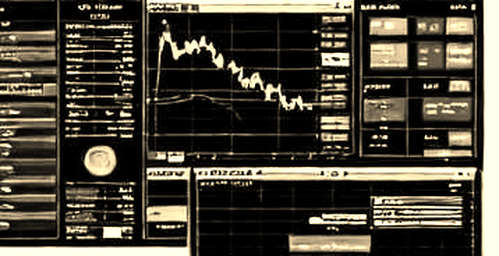
China's intervention is the opposite: it accepts the panic as real and attempts to override it with fiat. This is the 'moral hazard' that every crypto purist fears. By guaranteeing a floor, the state effectively tells investors: 'You do not need to understand fundamentals; you only need to trust that we will not let you lose more than an arbitrary amount.' The result is a market that is less efficient, not more stable. Based on my own work building a ZK-SNARK-based payment system in Berlin, I saw how hard it is to earn trust through math—but once earned, that trust is not subject to political whim.
The contrarian truth is uncomfortable: China's move is precisely the behaviour that makes centralized finance vulnerable to 'bank runs.' In crypto, a bank run is prevented not by a lender of last resort, but by a transparent, unchangeable ledger. When Terra collapsed, there was no state fund to stop it—and that is why the market recovered, because the code failed, not the institution. The $7.38 billion is a confession that the STAR Market's price was not discovered; it was administered.
The Contrarian Angle: Is Crypto Really Immune?
Yet I must pause. During the 2022 bear market, I retreated to a cabin in Jutland and audited 12 failed smart contracts. The common thread was not code vulnerability—it was over-leveraged designs that ignored real-world utility for speculative yield. Sound familiar? The STAR Market's collapse was also driven by over-leveraged speculative positions on unprofitable tech stocks. The difference is not in the mechanism of collapse, but in the mechanism of rescue.
Crypto's resilience comes from its refusal to rescue. That is both its strength and its blind spot. We celebrate decentralisation as self-sovereignty, but we also suffer from the absence of a stabiliser when liquidity freezes. The CSRC meeting scheduled for July 20, 2024 is China's attempt to write a new rulebook—perhaps one that includes circuit breakers, reduced IPO supply, or longer lock-ups. In crypto, we have similar tools: emergency multisig, governance shutdowns, and insurance funds.
The real question is: which trust architecture better handles unanticipated shocks? My experience building the Copenhagen Consensus—a multi-stakeholder code of conduct for AI-crypto integration—taught me that human judgment is irreplaceable. No algorithm could have predicted the Terra cascade. No state fund can prevent the next panic.
The Takeaway
China's $7.38 billion intervention is not a failure of policy; it is a failure of trust design. It proves that centralised markets, no matter how sophisticated, are built on faith in a few decision-makers. Crypto is built on faith in mathematical invariants and distributed governance. Both are fragile, but only one is honest about its fragility.
Truth is not what is seen, but what is trusted. The STAR Market's decline and rescue reveal a trust architecture that bends under pressure. Our job is not to replace it with a perfect code; it is to build systems that can withstand the pressure without needing a bailout. That is the only sustainable path forward.