
The Most Bullish Signal in Crypto Is an Empty Cell: When “N/A — Information Insufficient” Becomes the Trade
CryptoAnsem
It was late on a Tuesday when the file came through my private channel: “Final Protocol Risk Deck — Post-ETF Compliance Review.” The sponsor had put a $100M valuation on the project, and the deck was meant to convince a syndicate of allocators that the due-diligence process had been institutional, rigorous, and complete.
It was complete, in a sense. It contained a table of contents, an executive summary, risk matrices, categories for technology, tokenomics, market conditions, securities law, governance, ecosystem positioning, and a heat map with green, amber, and red labels. But below every one of those headings was the same phrase, repeated like a prayer: “N/A — Information Insufficient.”
I counted. Seven categories. Twenty-nine empty cells. Zero paragraphs containing a real number, zero lines of code, zero block explorers queried, zero order-book prints, zero funding-rate snapshots. This was not an oversight. Someone had spent real money to generate a document that looked like analysis but was, functionally, an error message.
Everyone talks about the dangers of a fake narrative in a bull market. I think the more urgent danger is the fake structure that contains no narrative at all, because the human brain will fill in the blanks with the most comfortable story. Code is law, but bugs are justice — and an empty risk matrix is a bug dressed up as a compliance feature.
I have been on the other side of this specific illusion. In late 2017, while the ICO machine was printing tokens from whitepapers that had fewer facts than this deck, I audited a token called CryptoGem. The whitepaper promised a marketplace for tokenized gemstones. The smart contract, however, contained an integer-overflow vulnerability in its transfer function — the kind of bug that allows a user to mint coins out of nothing. I published a short technical breakdown and shorted the token through Bitfinex’s lending markets. When the founder’s wallet drained the contract two weeks later, the token went to zero. My analysis was not an opinion; it was a function of code that refused to hide its own failure.
That memory returned as I looked at the empty cells in this present-day deck. The 2025 version of the CryptoGem scam does not hide in plain code. It hides in taxonomy. The deck-writer knows that a reader will see “Technical Risk: N/A” and not think “the code was never audited.” The reader will think “the auditor must not have found anything important enough to warrant comment.” The same sentence produces two opposite conclusions depending on the reader’s level of professional distrust.
And this is the core mechanical problem with crypto research in an ETF era: the market is now full of traditional-finance allocators who have been trained to respect process. They sit on committees that vote on positions. They need to see a checkbox, not a blank. So when an analyst presents a framework with neatly populated categories, the committee interprets the absence of red flags as if the absence itself were a certification.
Greeks don’t make that error. In the derivatives world, a missing quote is not the same as a low quote. If a market maker’s feed stops sending a two-sided market for a Bitcoin option, the trader never marks that option as cheap or expensive. An empty quote means the dealer is unwilling to take the other side, and the correct response is to widen the expected range, reduce size, or stop trading entirely. You treat the lack of a price as information: someone knows something you do not, or someone is too uncertain to make a market. Either way, a null print is a volatility event in disguise.
The irony is that crypto was supposed to improve this by making everything auditable. On-chain, there is no excuse for “N/A — Information Insufficient.” Token supply is visible. The code is visible. Contract-deployer history is visible. Exchange reserves are visible. The funding rate is visible. Even the wash trades on an NFT collection are visible, if you know where to look. In 2021, I spent weeks tracing wallets that were buying their own Bored Apes to push floor prices upward. I was called a conspiracy theorist until the wash-trading patterns caught the attention of regulators. But the data was there all along; no category in my spreadsheet was ever N/A. The people who did not want to see the manipulation simply never queried the data.
So when a modern research piece tells me “no information is available,” I do not hear a technical limitation. I hear a political choice.
Let me be precise about the difference between zero and null, because traders who confuse them usually end up donating premium to the market. Zero is a real number; it means the thing has value zero, quantity zero, risk zero. Null is not a number; it means the state of the world is undefined. In a smart contract, zero is a balance that can be proven. Null is a reverted transaction, a missing return value, an uninitialized storage slot. When a Solidity contract calls an external protocol and the oracle returns zero instead of reverting on a stale price, that is a catastrophic bug. A zero price may be processed as a valid value, executed, and cleared. A null return should force the contract to stop, investigate, and refuse to settle.
That is the exact behavioral difference between an experienced institutional trader and a retail FOMO buyer in the current bull market. The experienced trader sees “N/A — Information Insufficient” and stops the order flow. The FOMO buyer sees the same phrase and assumes that because no risk is listed, the risk must be negligible. For the inexperienced reader, an empty cell becomes a permission slip.
This is not an accident. The crypto funding ecosystem is now full of templates this way because narrative manufacture has become as competitive as technology. VCs do not want to sell “unknowns.” They want to sell the sensation of structure. A founder that presents a blank "technical due diligence" section can always claim the audit is forthcoming, or that details were omitted for security reasons, or that the layer is still in private testnet. The empty cell protects the story from peer review.
During DeFi Summer in 2020, I ran an arbitrage strategy that depended on high-quality data about yield discrepancies between borrowing and lending markets. I collateralized ETH on Compound, borrowed stablecoins, and deployed them into yield farms while hedging the spot exposure with a short future position. It was a delta-neutral construction that performed well for several weeks. Then the COMP reward inflation model started bending the yield curve in ways that my data feed did not fully capture. Some of the numbers I needed for smaller pools were not missing; they simply were never published. My model sorted them as zero rather than treating them as absent.
That single design flaw — the decision to code “no data” as “no return” — caused my system to over-allocate capital to illiquid positions. Within 48 hours, I had unwound the whole book, not because I had lost a substantial amount, but because I recognized that my framework had been lying to me by omission. I finished the summer with a 22% return, but the lesson lingered: no information is never neutral.
If you cannot differentiate between a missing number and a zero, you cannot trade volatility. The current market is flooded with narrative-driven tokens that claim to solve “liquidity fragmentation” — a manufactured problem, in my view, that is sold to investors as a reason to fund another bridge, another aggregator, another infrastructure layer. The data that would prove fragmentation is rarely provided in these pitches because the metrics are usually messy. Instead of showing order-book depth across venues, they show category names and declare victory. It is the same trick as the empty risk matrix.
So let me offer a contrarian rule for the rest of this bull cycle: treat “N/A” as a premium risk factor, not a discount. If a project publication says it cannot provide basic information about its token distribution, its liquidity profile, or its developer commit history, the correct response is not “we need more time to research.” The correct response is “there is no reason to research further until the missing data is provided.” Absence of information is not a reason to pay a lower price; it is a reason to refuse to make a price at all.
An NFT floor is a feeling, not a number. The same can be said of a crypto risk assessment that contains no numbers: it is a feeling about the level of trust the sponsor believes the audience will grant them.
What should the smart allocation look like, then? First, when a due diligence template returns a null value in any material category, do not fill the value with the project team’s narrative. Treat it as a directional alarm. If the category is “regulatory status,” the null means the project may be operating with no legal opinion — not that legal risk is absent. If the category is “team verification,” the null means identities are hidden — not that the founders have nothing to hide. If the category is “audit results,” the null means no audit has been completed — not that no vulnerabilities exist.
Second, be willing to carry cash instead of crypto when the research ecosystem can produce only a template that says N/A. In a bull market, cash feels like a lost trade every single day. But the true battle trader understands that optionality is a real position. When I sold out of my Terra hedge thesis in 2022 and kept long-dated puts on Bitcoin and Ethereum while everyone was buying the bottom on spot, I was accused of being permanently bearish. The option protection eventually saved $1.2 million of my portfolio during the UST depeg. That was not luck; it was a systematic preference for verified downside and unverified upside.
Third, verify data at a protocol level before you refer to any valuation. Pull the GitHub repo. Compile the code. Inspect the deployer address. Query the on-chain balances. None of these tasks depend on the opinion of the author who wrote the N/A-riddled deck. If you cannot compile the code yourself, find someone who can. If you cannot find anyone, you have just discovered a genuine technical null — and you should trade that signal as loudly as if the project had published a $100M exploit.
Battle-trading is not about always finding the clever hidden gem. It is about refusing to pretend that missing information has no information content. Markets are not only inefficient because of asymmetric knowledge; they are inefficient because of asymmetric ignorance. Some people know more than others, but more dangerous are the people who do not know what they do not know and have structured their tools to hide that absence.
The recent trend of “AI-generated research” makes this even worse, because large language models are statistically averse to saying “I do not know.” They will generate prose that sounds fluent and build tables with numbers that do not exist. In that environment, the boring phrase “N/A — Information Insufficient” is almost refreshing; at least it is honest about its own emptiness. But honesty about emptiness is not the same as honesty about the underlying project. A vacuum may be transparent, but it still contains no air to breathe.
So, what does this mean for the market in the next few quarters? As the bull cycle matures, the supply of cheap narrative will start to dwindle. The projects that cannot produce verifiable numbers will become obvious, not because their risk matrix will turn red, but because the empty cells will begin to look suspicious to an educated public. The institutional “process-first” crowd will eventually learn that process is not rigor and that a format is not a finding.
Look at the biggest collapses of previous cycles. They all had one thing in common: the data that mattered most was absent at the time of the investment. Terra had no honest stress test showing what would happen when the demand for UST slowed. The 2021 NFT lending blowups had no disclosure showing how floor prices could be surgically washed. The 2017 ICOs had code that rarely matched the claims. All of these produced beautiful decks with category labels, and none of them had cells that said “we are not sure this can survive.”
The market loves to add beta in a bull market. It loves leverage, momentum, and larger position sizes. That is precisely when the absence of information becomes most expensive, because the entire structure of forecast is built on assumptions that have no data attached. I do not allocate to projects that cannot give me a real number for a real risk. I do not trade options if the underlying has no defined volatility surface. And I do not read a seven-category risk matrix with twenty-nine N/A entries as a good sign. I read it as a seven-category failure.
NFT floor prices may be a feeling, but trading is not. The Greeks don’t care whether you like a project or whether its roadmap fits the current meta; they care only about the price of risk. When the research function cannot price the risk, the market maker must step back. That is the professional reaction to an empty quote, and it should be the reaction of every serious allocator who opens a document labeled “Comprehensive Review” and finds, underneath all the structure, a null value where a conclusion should stand.
In a bull market, the most expensive mistake is assuming that the absence of bad news is the presence of good news. Bad news is a data point. Good news is a data point. No news is also a data point — but it points toward uncertainty, not safety. Trade accordingly.
When you see the N/A next time, do not fill it with your own hope. A smarter approach is to ask the project team: “Explain the specific reason this cell has no value. Then come back with the audit report, the wallet address, the liquidity snapshot, and the change in open interest.” The teams that cannot answer that question are not ready for your capital. And the teams that can answer it will not need a 1,200-word deck to convince you.
Verification is not a gate you install after the investment. Verification is the investment. In an environment where code is law, empty code is the most dangerous kind of law — and in this market, information insufficiency is its own asset class.
You May Like

The Signal and the Noise: 250M USDC Meets a 9.5% Doubt on Solana
2026-07-23
The 23-Day Coincidence: How a $2M Bitcoin Donation Rewrote a Regulatory Settlement
2026-07-26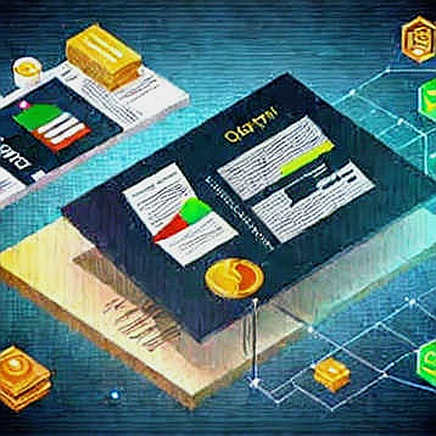
CoreWeave's 1040 Billion Backlog: A Mirage or a Fortress?
2026-08-12
The Interest-Rate Blind Spot: Why Sticky Inflation Exposes the Fragility of Crypto's 'High-Pressure' Narrative
2026-08-27