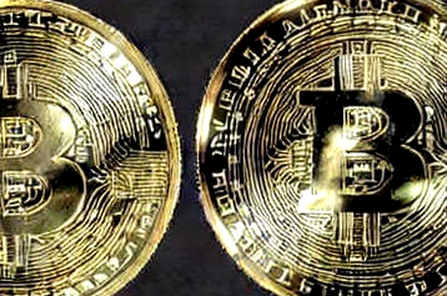
Over the past seven days, Bitcoin dropped from $80,000 to $63,000. Fear fills the air. Yet the real question isn’t the price—it’s what that price represents. Ledger co-founder Eric Larchevêque recently declared that a Bitcoin price of $1 million would be a symptom of global collapse, not a victory. I’ve spent years auditing blockchain projects for their philosophical integrity. This claim hit differently. It challenges the very covenant we thought we were building.
Let me set the context. Bitcoin’s code is simple: a fixed supply of 21 million coins, a decentralized ledger, and a promise of sovereignty. We called it digital gold. We called it the future of money. But Eric’s view reframes every bull case. He says Bitcoin has nearly zero value in a stable world. Its only real use is as a shield when the world burns. That’s a stark admission. We all know the talking points from Michael Saylor and ARK Invest about scarcity and institutional adoption. But Eric strips away the optimism. He forces us to confront a darker truth: the highest price target for Bitcoin is intrinsically linked to the worst outcome for humanity.
In 2017, as a 22-year-old software engineering student in Washington DC, I audited over 150 ICO whitepapers. I wrote a thesis titled “Code as Covenant,” arguing that blockchain is a mechanism for trustless social contracts. Back then, the narrative was about empowerment, about removing intermediaries and giving power to the people. The 2021 DeFi Summer made it about yield and profit. The 2024 ETF approval made it about mainstream adoption. But Eric’s comment plunges us back to first principles: what is this asset really for? He calls Bitcoin a “final settlement tool” for a world where governments fail. That aligns with my own belief from my time running a blockchain analytics firm—when I left because I saw DeFi protocols exploiting users in the name of innovation. The industry’s growth had outpaced its ethical infrastructure. Now, the same pattern emerges in the price narrative.
Let’s examine the core technical and values analysis. Bitcoin’s security budget comes from mining rewards and transaction fees. At $1 million per coin, that budget would be enormous—potentially trillions of dollars in annual miner revenue. But that energy and hardware would be sustained only if the network continues to process transactions in a crisis. Would the internet hold? Would electricity grids stay stable? These are not abstract questions. If the debt crisis Eric warns about leads to global instability, the very infrastructure supporting Bitcoin could fray. The code is robust, but the physical layer is not. That’s a blind spot in the disaster narrative.
From a values perspective, the “insurance” narrative is seductive. It gives a moral purpose to holding Bitcoin. Perversely, it turns every bear into a protector. The irony is that Eric’s argument validates the skeptics who call Bitcoin a speculative bubble. If the only path to $1 million is catastrophe, then those who buy Bitcoin today are essentially betting against global stability. They are hedging with humanity’s pain. That’s a heavy burden for a technology that started as a tool for financial inclusion. I saw this tension during my solitude retreat in 2022, after the market crash. I spent 400 hours rereading Hayek and Turing, trying to reconcile the promise of decentralization with the reality of its adoption. The conclusion was uncomfortable: the community had become the very thing it opposed—a group profiting from instability.
Now, the contrarian angle: pragmatism test. Eric’s view is not wrong, but it is self-serving. He co-founded Ledger, the leading hardware wallet company. Every time someone fears the collapse of the banking system and decides to self-custody, Ledger sells more devices. His warning about Bitcoin’s value in a stable world is essentially a sales pitch for cold storage. It’s a conflict of interest that the mainstream analysis rarely acknowledges. I know this from my own experience founding a crypto education platform. I had to constantly check my own biases—was I teaching principles or promoting a narrative that benefited my audience size? The same applies to every influencer who pushes the disaster narrative. We must ask: who gains from your fear?
Moreover, the disaster narrative assumes that Bitcoin will be the asset of choice in a crisis. History suggests otherwise. In times of acute stress—like the 2020 March crash—correlation between Bitcoin and equities spiked. It behaved as a risk asset, not a safe haven. Its true value might emerge only after a prolonged period of fiat erosion, not in the immediate chaos. If the US debt crisis triggers a sudden dollar collapse, Bitcoin price could initially plummet as holders liquidate for cash to buy essentials. The insurance doesn’t pay out immediately. That nuance is lost in Eric’s bleak forecast.
Then there’s the question of adoption. For Bitcoin to reach $1 million, it needs massive demand from people who fear the system. But in a world where governments are failing, who will provide the on-ramps? Exchanges might be frozen, capital controls imposed, and hardware wallets confiscated at borders. The very environment that makes Bitcoin valuable also threatens its liquidity. This is the paradox that my “Ethical Architecture” framework tries to address: technology must be designed with its worst-case operating conditions in mind. Bitcoin’s current accessibility depends on a functioning global banking system. Without it, self-sovereignty becomes harder, not easier.
What about the alternative path? What if the world remains messy but not apocalyptic? Inflation runs at 5%, debt grows, but society stays intact. In that scenario, Bitcoin’s adoption could continue as a gradual store of value, perhaps reaching $200,000 over a decade. That is a “boring” forecast, but it avoids the moral anchor of disaster. Eric’s single-minded narrative ignores this moderate future. It paints a false binary: either $1 million and collapse, or $63,000 and irrelevance. The reality is far more nuanced.
I want to bring in two signatures from my own writing: “Verify the code, trust the community” and “Tech changes. Values remain.” The code of Bitcoin is verified—it’s the most secure blockchain ever built. But the community? We are being asked to trust that the disaster narrative comes from a place of altruism, not profit. I have audited the financial incentives. Eric holds a significant personal position in Bitcoin, as he admitted in an interview. He also benefits from Ledger’s sales. That does not invalidate his argument, but it weakens his authority as an impartial oracle. The covenant—the social contract—must include honesty about motives.
My own story informs this skepticism. After the 2022 bear market, I retreated to a cabin in rural Virginia. I disconnected from crypto Twitter. I reflected on why so many predictions from 2017 had failed. The industry had grown, but the values had eroded. The disaster narrative is just the newest form of that erosion. It co-opts fear to drive price action, turning what should be a tool for emancipation into a device for speculation. The bulls react to price drops with hype. The bears reflect with doom. But we—the builders—must focus on creating systems that work in all scenarios. That means building robust infrastructure for self-custody, yes, but also for decentralized exchange, for lending without oracles, for governance without elite multi-sigs. The technology must be resilient enough to serve a peaceful world, not just a crumbling one.
Takeaway: forward-looking thought. The quest for $1 million Bitcoin is not just a price target; it’s a referendum on our values. Do we want an asset that thrives only when the world suffers? Or do we want a technology that enables prosperity for all? As a crypto education platform founder, I see my role as clarifying these choices. The next bull market will not be defined by price alone. It will be defined by the stories we tell about why price matters. Eric Larchevêque’s narrative is powerful, but it is incomplete. It ignores the possibility of a world where Bitcoin becomes the backbone of a fairer economy, not a lifeboat from a sinking ship. That future requires deliberate design, ethical pragmatism, and a rejection of simplistic doom.
I will leave you with this: the code does not force us to choose between survival and growth. The covenant does. As we navigate this bear market, where survival matters more than gains, let us not lose sight of why we started building. Let us not trade our principles for a price. “Bulls react. Bears reflect. We build.” The construction of a resilient, just system happens in the quiet times, not in the frenzy.
I have audited the predictions against my own experience of 150 whitepapers, 400 hours of solitary study, and real crises. The conclusion is clear: the highest price of Bitcoin should be a measure of adoption, not of collapse. If we build the right infrastructure, educate the right audience, and uphold the covenant, the price will follow as a side effect—not as the goal. That is the only path that honors both the code and the community.
Trust, but verify. And when you verify, look beyond the price action to the stories underneath.