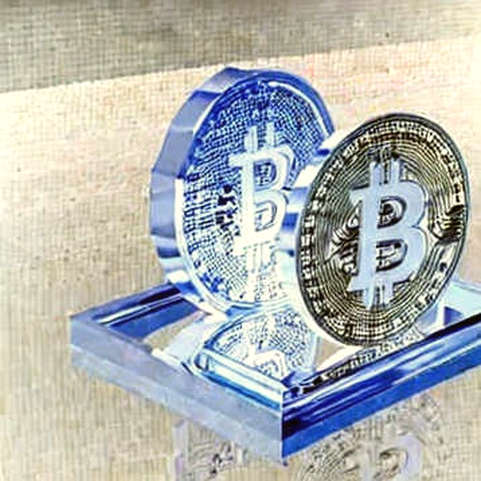
Yesterday, a series of tanker explosions near the Strait of Hormuz triggered an immediate military response from Iran, sealing one of the world’s most vital energy arteries. Markets panicked, oil futures surged, and the predictable flight to gold and US Treasuries commenced. But something else happened: Bitcoin, the supposed 'digital gold,' barely moved. Over the next 24 hours, the leading cryptocurrency oscillated within a 2% band, its volatility overshadowed by the dramatic gyrations in WTI crude. This moment exposes a cognitive dissonance at the heart of crypto maximalism – the belief that digital assets can remain insulated from analog coercion.
I’ve spent a decade in the blockchain trenches, from auditing reentrancy vulnerabilities in a fledgling DeFi protocol during the ICO mania to watching the DeFi summer morph into a speculative carnival. I’ve seen code fail, but geopolitical failures are different — they are messier, slower, and far more lethal. The Strait of Hormuz is not just a shipping lane; it’s a 21st-century Suez for the globalized soul. Approximately 20% of global oil transits these narrow waters. Iran’s blockade, following a series of mysterious tanker explosions, is the kind of black swan event that supposedly justifies crypto’s existence: a centralized choke point weaponized, sending shockwaves through interdependent economies. Yet, the market’s reaction reveals a stubborn truth: crypto remains a prisoner of the very fiat and energy systems it claims to transcend.
Let’s dissect what happened. The U.S. Energy Information Administration immediately warned of supply risks, and Brent crude spiked over 15% in the first hours. But the futures curve offered a more nuanced story: the probability of WTI hitting $110 by July 2026 stood at only 4.8% before the event. This number, buried in prediction markets, contradicts the immediate panic. I read it as a bet that the blockade will be short-lived — perhaps days, not weeks — because both Iran and the global economy have too much to lose. Economic sanctions analysis from my time studying blockchain forensics taught me to read such signals: Iran’s own oil exports would drop to zero, starvation of hard currency accelerates. This is a mutual assured destruction scenario, but on a compressed timeline. The market, for now, agrees: it prices a quick resolution, not a long war.
But this is precisely where crypto’s narrative cracks. If the blockade persists even a week, energy costs for Bitcoin miners could skyrocket. In 2021, I analyzed the carbon footprint of major mining pools for a research piece; most relied heavily on fossil fuels, including natural gas from the very region now destabilized. The assumption that crypto is ‘energy independent’ is a myth. Miners in Texas, Kazakhstan, and Iran itself (yes, Iran accounts for about 7% of Bitcoin hashrate) depend on cheap energy tied to global oil and gas markets. A sustained oil shock would inflate mining costs, potentially forcing smaller operators offline and centralizing hashrate further. The ‘proof of work’ that secures Bitcoin is ultimately proof of empire — the empire of energy markets controlled by geopolitics.
Stablecoins, another supposed safe harbor, face a subtler threat. USDT and USDC are pegged to the dollar, but their reserves include Treasury securities and commercial paper. If the Federal Reserve is forced to raise interest rates to combat oil-driven inflation, bond prices fall, and the stablecoin reserves may come under pressure. I remember the Terra collapse, but this is different: it’s a slow bleed, not a flash crash. During the 2020 DeFi summer, I facilitated discourse among thousands of early adopters and witnessed how quickly a liquidity crisis could expose undercollateralization. The same principle applies. The biggest holders of stablecoins are now energy importers in Asia and Europe — nations like India, Japan, and Germany. If their currencies depreciate against the dollar due to soaring oil bills, their demand for stablecoins might surge as a hedge, but that creates massive inflow pressure, challenging the issuance mechanism. Or they might sell everything to buy actual oil, sparking a liquidity flight from crypto to real assets.
Perhaps the most overlooked aspect is the human dimension. During my six-month retreat after the 2022 crash, I taught blockchain fundamentals to underprivileged teenagers in Milan. Many asked: ‘Why should we care about code when our families can’t afford heating?’ The Strait of Hormuz crisis is a brutal reminder that decentralization is a luxury for those whose basic needs are already met. For a Yemeni family whose food imports depend on the Red Sea route, the abstract benefits of borderless money mean nothing if the price of diesel for water pumps doubles overnight. This is the contradiction I have always wrestled with: we build elegant cryptographic protocols while the physical world burns. My own manifesto, ‘Proof of Soul,’ argued that identity on-chain could preserve human authenticity in an AI age, but when a blockade endangers millions of lives, the problem isn’t identity — it’s access to energy and food.
Now, the contrarian angle. This event might actually accelerate blockchain adoption in unexpected ways. Consider the energy sector: if oil becomes unreliable, renewable microgrids with blockchain-based peer-to-peer energy trading could become a viable alternative for communities seeking energy independence. I recall a project in rural Austria where a solar cooperative used a private blockchain to track energy credits; post-crisis, such models could scale. Similarly, the blockade could boost decentralized physical infrastructure networks (DePIN) like Helium or Filecoin, which reduce reliance on centralized internet and energy grids. But this is not automatic. It requires a fundamental shift in mindset — from seeing crypto as a financial escape to viewing it as a civic infrastructure tool.
Nevertheless, the immediate takeaway is sobering. The Strait of Hormuz blockade dismantles the illusion of crypto as a safe haven. It is still deeply entangled with analog risk: energy supply, geopolitical alliances, and the very fiat currencies it seeks to supplant. I am not a doomer; I have spent years advocating for decentralization’s moral potential. But true resilience demands that we stop pretending we are separate from the messy realities of power and resources. Blockchain can help, but only if we admit its current complicity in the systems it claims to undermine. The path forward is not to build a parallel universe, but to weave cryptographic safeguards into the fabric of physical existence — starting with the climate and energy transitions, not just financial arbitrage.
Yes, crypto can be a tool for good. I have seen it empower marginalized traders, create transparent supply chains, and preserve digital identity. But this week, as oil tankers sit idle and families brace for $150 per barrel, the question is no longer about code. It is about courage. Are we willing to redesign our systems to prioritize human dignity over speculative profit? The Strait of Hormuz black swan is not a bug — it’s a feature of a world we built. Decentralization is not just about removing intermediaries; it’s about taking responsibility. The market might price in a quick recovery, but the ethical fracture will persist long after the strait reopens.