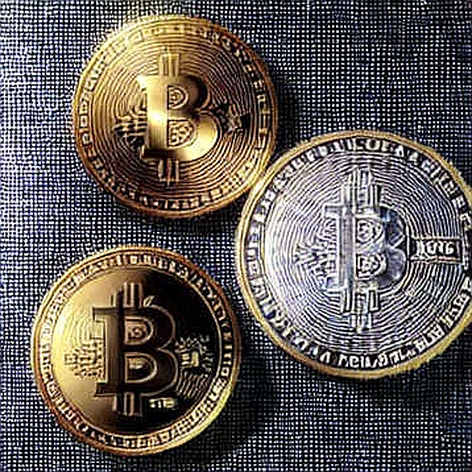
On August 27th, a wallet address on Hyperliquid opened a 12x leveraged long position on Bitcoin worth $43.72 million. The average entry price was $80,140.6. Within hours, it was showing an unrealized loss of $748,000. This position now stands as the eighth-largest BTC holding on the platform. The same wallet had been short just three days prior, losing $831,000 in the process.
This is not a story about a savvy trader. It is a story about the architecture of risk in a market that has convinced itself it has matured. And it is a story about what happens when a platform's core value proposition—speed, efficiency, and the illusion of control—meets the unrelenting mathematics of leverage.
I have spent the better part of a decade watching these patterns emerge. In 2017, I analyzed over 1,500 ICO whitepapers and found that 85% lacked viable tokenomics. In 2020, I audited the undercollateralized risk of early lending protocols and predicted the 2022 crash. The names change. The structures do not. What we are witnessing on Hyperliquid is not an anomaly. It is the logical endpoint of a market that has traded genuine innovation for the seductive promise of high-speed speculation.
The Architecture of Speed
Hyperliquid is not a typical DeFi protocol. It is a self-built Layer-1 blockchain designed specifically for a central limit order book (CLOB) model. This is a hybrid approach: the matching engine is centralized, but asset custody and settlement occur on-chain. The platform claims a throughput of 200,000 transactions per second, a figure that, if true, places it far ahead of most competitors.
This architecture is the source of its appeal. Traders get the speed and responsiveness of a centralized exchange (CEX) without the counterparty risk of holding funds on a centralized platform. The order book is deep. The latency is low. For a whale looking to move tens of millions of dollars without moving the market, this is the closest thing to a safe harbor in the DeFi ecosystem.
But this safety is conditional. The centralized matching engine is a single point of failure. The validator set is small and team-dominated. The platform's risk management systems have not been tested under the kind of extreme stress that a sudden 8% Bitcoin move would create. The code is open source and audited, but audits are not guarantees. They are snapshots of a moment in time, not proof of future resilience.
I have seen this movie before. The promise of speed is always seductive. The reality of fragility is always deferred. Until it isn't.
The Whale's Gambit
The wallet in question—0x604…0b21d—is not a novice. It opened a short position on August 24th worth $45.17 million. By August 25th, that position had lost $831,000. Rather than retreat, the trader flipped. On August 27th, they opened a long position with 12x leverage, valued at $43.72 million.
This is what I call a "revenge trade"—a psychological response to loss that manifests as increased risk-taking. The trader is not making a calculated bet on Bitcoin's direction. They are trying to win back what they lost. The 12x leverage means that a mere 8.3% move against them—a drop to approximately $73,463—would trigger liquidation.

This is not a sophisticated strategy. It is a gamble dressed in the language of market analysis. And it is happening on a platform that prides itself on attracting sophisticated traders.
The position's status as the eighth-largest BTC holding on Hyperliquid is a testament to the platform's depth. It can absorb large orders without significant slippage. But it is also a warning. A position of this size, with this level of leverage, is a potential catalyst for cascading liquidations if the market moves against it.
The Liquidity Illusion
There is a narrative that has taken hold in the crypto market: that liquidity is abundant, that markets are deep, and that the infrastructure is robust. This narrative is a comfortable fiction. Liquidity is not a static pool. It is a dynamic flow, and it can evaporate in moments of stress.
Hyperliquid's order book depth is real, but it is not infinite. A $43.7 million position with 12x leverage is not a sign of market health. It is a sign of market fragility. The platform's risk engine is designed to handle normal market conditions. The question is whether it can handle the abnormal ones.
I have spent years studying the relationship between leverage and market stability. The pattern is consistent: high leverage leads to high volatility, which leads to cascading liquidations, which leads to market crashes. The 2022 Terra/Luna collapse was not a black swan event. It was the inevitable result of a system that prioritized growth over sustainability.

Hyperliquid is not Terra. But the underlying dynamics are the same. The platform's success has attracted large traders, and large traders bring large risks. The whale's position is a microcosm of the broader market: a bet on continued upward movement, funded by borrowed capital, with no margin for error.
The Regulatory Shadow
Hyperliquid operates in a regulatory gray area. The team is based in the United States, but the platform is global. It does not require KYC, a feature that attracts users but also invites scrutiny. The U.S. Commodity Futures Trading Commission (CFTC) and the Securities and Exchange Commission (SEC) have both signaled an interest in regulating decentralized derivatives platforms.
The whale's trade is a potential entry point for regulators. It demonstrates that Hyperliquid is facilitating leveraged derivatives trading on a scale that rivals centralized exchanges. If regulators decide to act, the platform could face restrictions on U.S. users, which would significantly impact its liquidity and user base.
This is not a hypothetical risk. It is a structural one. The platform's "quasi-anonymous" model is a liability, not a feature. It may attract users in the short term, but it creates a long-term vulnerability that could undermine the entire ecosystem.
The Human Element
Behind the numbers and the technical analysis, there is a human story. A trader who lost $831,000 and decided to double down. A platform that facilitated the trade without question. A market that rewards risk-taking without considering the consequences.
I have seen the psychological toll of these cycles. In 2022, after the Terra/Luna collapse and the FTX bankruptcy, I retreated from public discourse for six months. I spent that time studying historical economic bubbles, comparing the crypto crash to the 1929 stock market panic. The patterns were eerily similar: a period of exuberance, a moment of reckoning, and a long, painful aftermath.
The whale on Hyperliquid is not a villain. They are a participant in a system that incentivizes risk-taking. The platform is not a villain either. It is a product of a market that values speed and efficiency over stability and resilience.
But the consequences are real. If this position is liquidated, it will not just affect the trader. It will affect the market. It will affect the platform. It will affect the broader ecosystem.
The Verifiable Truth
I have built my career on a simple principle: verifiable truth. I do not make predictions. I analyze data. I identify patterns. I draw conclusions based on evidence, not hope.
The evidence here is clear. A whale has taken a highly leveraged position on a platform that has not been tested under extreme stress. The position is already showing losses. The risk of liquidation is real. The potential for cascading effects is significant.
This is not a reason to panic. It is a reason to be cautious. The market is in a period of consolidation, with Bitcoin trading around $80,000. The whale's position is a bet that this level will hold. If it does not, the consequences could be severe.
The Contrarian View
There is a counter-narrative to my analysis. It goes like this: the whale's trade is a sign of confidence. A sophisticated trader, with access to information and analysis, has chosen to go long at this level. The fact that they are willing to use 12x leverage suggests they have a high degree of conviction.
This narrative is seductive. It suggests that the market is rational, that the smart money is buying, and that the current price is a bargain. But it ignores a critical fact: the same trader was short just three days ago and lost money. Their judgment has already been proven fallible.
The contrarian view also ignores the structural risks. Hyperliquid's centralized matching engine is a single point of failure. The platform's validator set is small. The regulatory environment is uncertain. These are not minor concerns. They are existential threats.
I am not saying that Hyperliquid will fail. I am saying that the risks are real, and they are not being priced in. The market is focused on the potential upside of the whale's trade, not the potential downside.
The Takeaway
In the quiet aftermath, only the resilient remain. This is a lesson I have learned repeatedly over the past decade. The market rewards those who survive, not those who take the biggest risks.
The whale's trade is a reminder of the fragility of the current market structure. It is a reminder that leverage is a double-edged sword. It is a reminder that the platforms we rely on are not invincible.
I do not know what will happen to this position. I do not know if Bitcoin will hold $80,000. But I do know that the risks are real, and they are not being adequately addressed.
DeFi's glass house shatters under its own weight. The question is not whether it will break, but when. And when it does, the consequences will be felt by everyone who believed in the illusion of stability.
Beyond the illusion, the current never truly stops. The market will continue to move, regardless of what happens to this whale. The question is whether we will be prepared for what comes next.
Liquidity is a ghost, but the debt is real. The positions we take today will have consequences tomorrow. The only question is whether we are willing to face them.
When the flow stops, we see what truly holds. And in this moment, the flow is still moving. But the signs are there. The fragility is exposed. The house of cards is swaying.
I have been here before. I have seen the patterns. I have analyzed the data. And I know that the only thing that matters is survival. Not gains. Not glory. Survival.
The whale on Hyperliquid is a story about risk. But it is also a story about the market we have built. A market that rewards speed over stability, leverage over resilience, and speculation over substance. It is a market that is fragile, and it is a market that will eventually break.
The only question is when. And whether we will be ready.